Guides
Email marketing for franchises: lawful lists, authenticated sending and outcomes
Franchise email marketing in 2027 needs lawful list growth, local relevance, authenticated sending, accessible messages, controlled access, and outcome measurement.
What to take away
- Contracts and disclosed practices decide who owns an audience, not the brand, market, or location that collected the address.
- Keep consent, preference, suppression, and source records connected so lists stay lawful.
- Separate message value, technical delivery, inbox placement, response, and business outcomes.
- Give locations useful fields and customer context without fragmenting governance.
Franchise email marketing is a governed way for one brand and many local businesses to reach people with a valid reason to hear from them. It covers audience collection, identity, consent, preferences, authentication. It depends on lawful lists and authenticated sending, and on outcomes that hold up locally.
It covers content, offers, accessibility, sending, and replies. It covers suppression, measurement, security, and retention; the hard part is not a template but keeping every message accurate for the recipient and location within one trustworthy system.
Give every email a business job
Separate welcome, education, service, appointment, transaction, loyalty, event, win-back, feedback, urgent notice, and franchise-development messages. Each job needs its own audience rule, evidence, timing, sender identity, action, reply owner, and measurement. A purchase receipt and a promotional newsletter may share a design system, but they should not be treated as the same communication.
| Message job | Required evidence | Primary outcome |
|---|---|---|
| Welcome | Valid source and stated expectations | Useful first action |
| Local offer | Current terms and availability | Qualified redemption |
| Service reminder | Customer relationship and timing | Completed appointment |
| Education | Reviewed subject matter | Informed next step |
| Feedback | Real experience and safe response route | Actionable service evidence |
| Development | Candidate source and controlled claims | Qualified conversation |
Choose list ownership before collecting addresses
Map who controls the subscriber record, who can send, which location relationship exists, how transfers are handled, and what happens when a unit closes. A central list can enforce consistent preferences and suppressions. Local segments can preserve relevance. Separate unmanaged lists create duplicate messages, inconsistent opt-outs, security gaps, and disputes when operators change.
Create a data dictionary for source, date, method, disclosed purpose, location, topics, language, customer state, permission evidence, last meaningful activity, suppression reason, and retention rule. Do not infer consent from a business card, purchase, franchise inquiry, scraped page, or shared spreadsheet without reviewing the applicable facts and rules.
One worked record shows how the fields fit together:
- Source
- "counter signup form"
- Date
- "signup date"
- Method
- "in person"
- Disclosed purpose
- "local offers and service reminders"
- Location
- "LOC-214"
- Topics
- "service, seasonal offers"
- Status
- "active"
- Permission evidence
- "signed form on file"
- Last meaningful activity
- "last purchase"
- Suppression reason
- "none"
- Retention
- "24 months from last activity"
When that customer opts out of offers, the topics field changes, the suppression reason records "offers opt-out", and the service reminder basis stays attached to the same identity.
Understand the legal baseline
The CAN-SPAM Act, 15 U.S.C. § 7701 et seq., covering commercial email requirements addresses misleading transmission information and subject headings, identification, physical address, opt-out mechanisms, and honoring certain requests. Definitions, exceptions, other laws, and the facts of a campaign matter.
Use the statute as a primary reference and obtain qualified advice for the franchise's messages, audiences, and jurisdictions.
A legal checklist should not become the value proposition. People should understand why they are receiving the message, who sent it, which local relationship applies, and how to change what they receive. Record the approved interpretation, responsible lawyer or reviewer, date, jurisdictions, and operational control rather than letting every location invent compliance text.
Design a network audience model
| Audience field | Why it matters | Control |
|---|---|---|
| Source | Explains how the address entered | Immutable acquisition record |
| Brand and location | Identifies the relationship | Stable identifiers |
| Topic | Supports useful preferences | Controlled vocabulary |
| Status | Separates active, pending, bounced, or suppressed | Event history |
| Consent or basis | Supports lawful use | Evidence and date |
| Owner | Assigns corrections and replies | Named team |
A person may relate to more than one location or message purpose. Do not solve that complexity by cloning the contact into disconnected lists. Use a master identity with auditable memberships and a network-wide suppression layer. Define how an opt-out from one program differs from a request to stop all marketing, and test that choice end to end.
Protect sender identity and secure the operating chain
Inventory sending domains, subdomains, From names, reply addresses, IPs, vendors, DNS records, authentication, tracking domains, templates, forms, feeds, and integrations. Keep ownership in company-controlled accounts. Separate promotional, transactional, franchise-development, and high-risk traffic when the operating model needs different reputation, access, or continuity.
Authentication and provider requirements affect delivery, but they do not prove that a list is wanted or a message is useful. Monitor SPF, DKIM, DMARC, DNS, encryption, complaints, bounces, deferrals, blocks, and vendor changes. Introduce new domains, infrastructure, formats, and volume through controlled tests rather than sudden network-wide releases.
Limit access to named users, require strong authentication, review integrations, protect export files, and monitor administrator changes. Treat forms, point-of-sale systems, customer platforms, agencies, and email service providers as one data chain. Test recovery, breach response, suppression restoration, provider failure, and vendor exit before they are needed.
Platform choice matters less than the data model. Mailchimp, Klaviyo, Constant Contact, HubSpot, and Salesforce Marketing Cloud appear often in North American franchise systems, and larger brands sometimes run Braze or Iterable.
Ask whether the platform supports per-location sending identities, network-wide suppression, sub-account permissions, and export of the full consent record. Export control is what keeps ownership real.
Cost follows contacts, locations, and support. Published list prices change often. For a few thousand contacts, a self-serve platform commonly falls between a free tier and a few hundred dollars a month, and implementation or agency work is quoted separately. Treat those figures as typical ranges and confirm current pricing with the vendor.
Create centrally controlled, locally useful messages
Lock identity, typography, required disclosures, preference paths, data fields, tracking rules, and sensitive claim components. Give locations editable areas for verified hours, people, events, inventory, service availability, community news, and local action. Every field needs an owner, fallback behavior, and expiration rule. A blank or old local field should fail the send rather than publish a guess.
Central responsibility
- Offer
- Terms, approved claim, dates
- Event
- Template and rights standard
- Service
- Accurate method and limitations
- Story
- Consent and editing rules
- Footer
- Identity, address, preferences
- Reply
- Routing design and service level
Local responsibility
- Offer
- Availability and fulfillment
- Event
- Venue, time, capacity, contact
- Service
- Local availability and route
- Story
- Verified person and experience
- Footer
- Correct location context
- Reply
- Timely local response
Build accessible messages
Use meaningful headings, logical reading order, real text for essential information, sufficient contrast, and descriptive links. Add useful alternative text, and keep tap targets usable.
Keep layouts readable if images are blocked or text enlarged, and never put offers, deadlines, codes, or safety messages only in an image. Test with keyboard, screen reader, high zoom, dark mode, and mobile clients with images off.
Plan automations as customer states
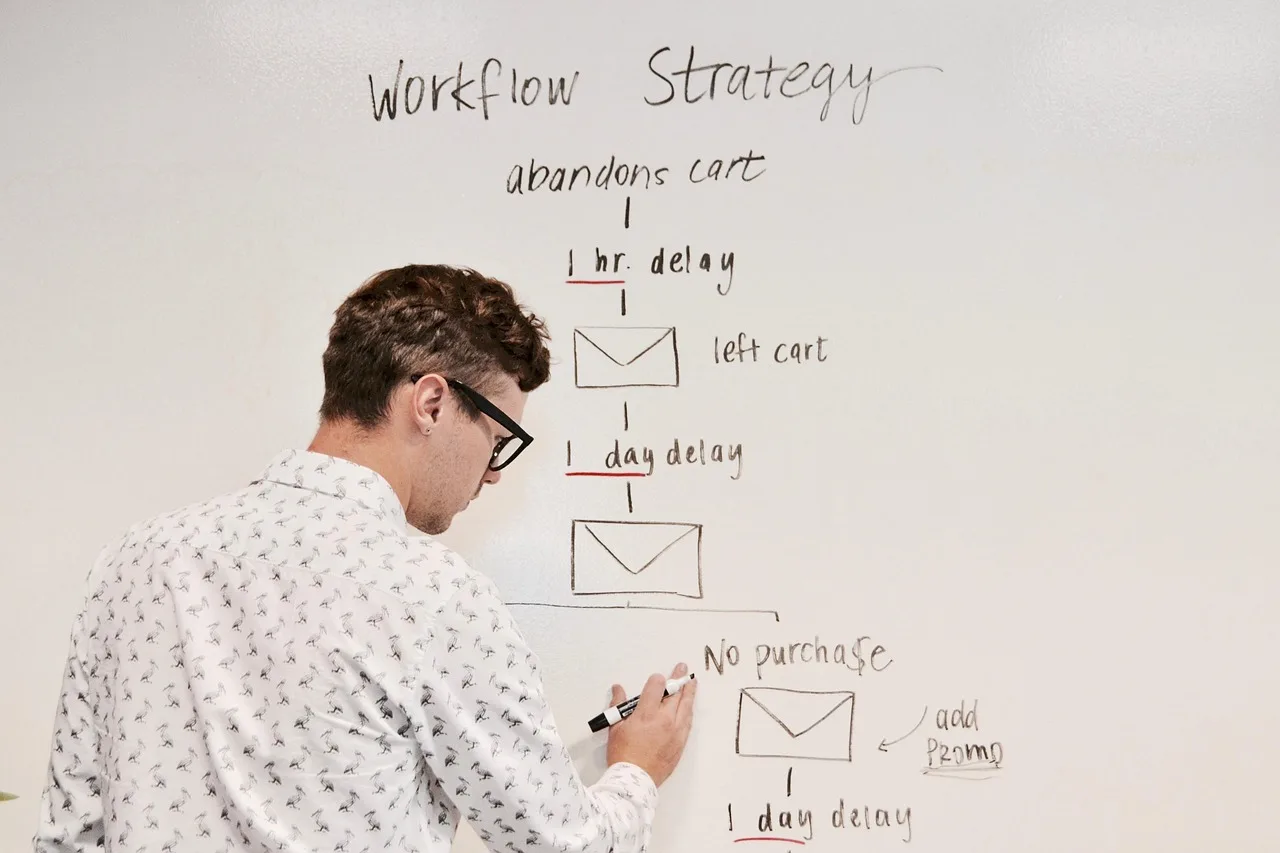
An automation should respond to a verified event, not merely wait a fixed number of days. Define entry, eligibility, exclusion, content, frequency, exit, re-entry, failure, and suppression rules. A welcome sequence stops when the expected action occurs. A reminder pauses after cancellation. A win-back flow respects current customer status and location availability.
- Name the customer state and evidence event
- Confirm the intended message purpose and audience
- Set frequency, conflict, and quiet-period rules
- Check local facts at send time
- Route replies and failures to an owner
- Measure completion and negative signals
- Review every automation after data or system changes
Operate replies and complaints
Use a monitored reply path. Route location questions, billing problems, accessibility needs, privacy requests, safety issues, and franchise inquiries separately. A no-reply address may reduce visible workload while increasing customer effort. Protect personal information, acknowledge what can be confirmed, and record the handoff. Complaint feedback and unsubscribe events should update the correct identity quickly.
Measure beyond opens
| Stage | Measure | Caution |
|---|---|---|
| Audience | Valid additions by source | Raw list size hides quality |
| Delivery | Accepted, bounced, deferred, or blocked | Acceptance is not inbox placement |
| Attention | Clicks, replies, or content use | Privacy features affect opens |
| Action | Bookings, orders, visits, or qualified leads | Attribution can be incomplete |
| Economics | Contribution after platform and labor cost | Lag and capacity matter |
| Quality | Opt-outs, complaints, cancellations, and resolution | A conversion can still be harmful |
Report counts with rates, denominators, source, and timezone. Add window, exclusions. Compare similar locations, message jobs, customer states, acquisition sources. Annotate platform changes, privacy features, template releases, offers. Note outages, closures, tracking changes.
Use holdouts or controlled cohorts where practical. Avoid attributing every later purchase to the last email click. Franchise lead generation depends on the same discipline: inquiry routing and awarded counts belong in the report.
Run a steady cadence
- Dailymonitor failures, urgent replies, opt-outs, complaints, and compromised access
- Weeklyverify scheduled campaigns, local fields, automations, and response queues
- Monthlycompare audience quality, delivery, outcomes, cost, and service by cohort
- Quarterlyaudit access, infrastructure, templates, sources, preferences, vendors, and retention
- Annuallyrevisit ownership, jurisdictions, architecture, platform mix, and measurement definitions
Typical send shapes: one monthly newsletter per location, plus service reminders triggered by the customer's own cycle. A welcome message goes out within a day of signup, and a win-back waits until the location confirms availability. Frequency figures from other brands are a starting question, not a target.
A durable program earns permission repeatedly through relevance, clarity, and control, so the central team should make safe local execution easier. Local teams should add facts and relationships the center cannot create.
When audience record, sender identity, message, reply, and outcome agree, email becomes a useful franchise service, not another volume target. Clear ownership of local accounts and posts follows the same discipline as franchise social media.
Check sources before release
For franchise email marketing, the GAO evaluation design guide explains how evaluation questions, evidence needs, and design choices fit together. The guide is written for federal program evaluation. Use its design discipline as a check on the method, not as proof that a marketing result is causal or transferable.
The W3C Privacy Principles statement gives system designers a shared vocabulary for privacy and warns against shifting privacy work onto individuals. Apply that principle to the data flow behind franchise email marketing. It does not replace the law, contract terms, consent analysis, or a review of the actual configuration.
The GOV.UK technology selection guidance recommends choices that can change over time, preserve data control, address security risk, and include ownership cost. Those public-service rules become useful buying questions for franchise email marketing, but they are not private-sector mandates or product endorsements.
Apply these checks to the actual workflow. Record the tested data, roles, product versions, exceptions, and approval date. Repeat the review after a material source, model, access, contract, or decision change. None of the three sources certifies a local implementation or supplies a guaranteed result.
Common questions
Who owns a franchise email list?
Ownership depends on contracts, law, disclosed practices, systems, and the customer relationship. Document control, access, use, transfer, suppression, and exit before collecting addresses.
Should each location send its own newsletter?
Only when the location has distinct useful material, verified data, trained ownership, and enough volume to operate responsibly.
Are open rates reliable?
They are affected by client behavior and privacy features. Use them cautiously and prioritize clicks, replies, completed actions, economics, and quality.
Can a franchisor email every local customer?
Review the source, disclosed purpose, permissions, contracts, jurisdictions, and customer expectations with qualified counsel before expanding use.
How often should a franchise send email?
Use a cadence justified by the message job and subscriber value, with frequency controls and negative-signal monitoring.
In this guide
- Franchise email marketing questions nobody wants to ask out loudCommon franchise email marketing questions cover list ownership, consent, local sends, authentication, unsubscribes, sender identity, replies, and metrics.
- Franchise email marketing: find the failed stage and run a controlled repairA franchise email marketing guide to finding the failed stage, checking provider evidence, and running controlled repairs one variable at a time.
- Franchise email marketing examples with the reasoning laid bareFranchise email marketing examples from real brands show the data, controls and outcomes behind welcome, event, service, loyalty, win-back and development sends.
- Franchise email marketing mistakes: the traps and the way around themFranchise email marketing mistakes include unclear list sources, duplicate sends, false local facts, weak authentication, broken opt-outs, and vanity reporting.
- Franchise Email Marketing Checklist for Local CampaignsFranchise email marketing checklist for local offers and territory recruiting: review approvals, audience, accessibility, opt-outs, and results.
- A Method for Franchise Email Marketing BenchmarksFranchise email marketing benchmarks need clean data and matched cohorts. Segment territory and franchise-recruiting emails without claiming a universal rate.
- Authentication and exit terms decide which franchise email marketing tools lastFranchise email marketing tools should be compared by audience controls, location roles, authentication, approvals, preferences, exports, security, and exit.
- Franchise email marketing best practices for consentFranchise email marketing best practices: confirm local recruiting consent, keep proof, and follow CAN-SPAM, privacy laws, and mailbox-provider rules.
- Franchise email marketing case studies: what two vendor records show and how to set a baselineWhat the Pi Co. and KOA email records report, what they leave out, and how a franchise system sets its own baseline before copying a program.
- Franchise email marketing trends: hypotheses to testFranchise email marketing trends for 2027 are testable hypotheses for territory recruiting, sender rules, privacy, personalization, and local follow-up.