Operations
Part of Email marketing for franchises: lawful lists, authenticated sending and outcomes
Franchise email marketing examples with the reasoning laid bare
Franchise email marketing examples from real brands show the data, controls and outcomes behind welcome, event, service, loyalty, win-back and development sends.
What to take away
- A useful example starts from a customer state, not a promotional idea.
- Named franchise campaigns show which data each message type actually needs.
- Central templates need live local fields and a safe fallback when one is missing.
- Preferences and suppression must survive a location transfer.
- Every example needs a review date and a named trigger for an earlier check.
Franchise email marketing examples earn their place when they show the data, local facts, frequency and measurement behind a send. Copy the operating pattern, not the wording. Review every example against the actual audience, offer, platform and location.
Six patterns, with a franchise that runs each
| Pattern | Franchise example | Entry evidence | Exit or success |
|---|---|---|---|
| Welcome | Orangetheory studio intro | New valid subscription | First class booked |
| Local event | Home Instead community session | Market and topic choice | Registration or capacity reached |
| Service reminder | Jiffy Lube oil-change notice | Current service schedule | Confirmed, changed or canceled |
| Loyalty | Chick-fil-A One rewards | Eligible purchase history | Relevant repeat action |
| Win-back | Massage Envy lapsed-member offer | Defined inactive state | Return or suppression |
| Development | Anytime Fitness franchise inquiry | Candidate request and stage | Qualified next conversation |
| Promotional reward | Domino's Piece of the Pie | Points on a qualifying order | Reward redeemed |
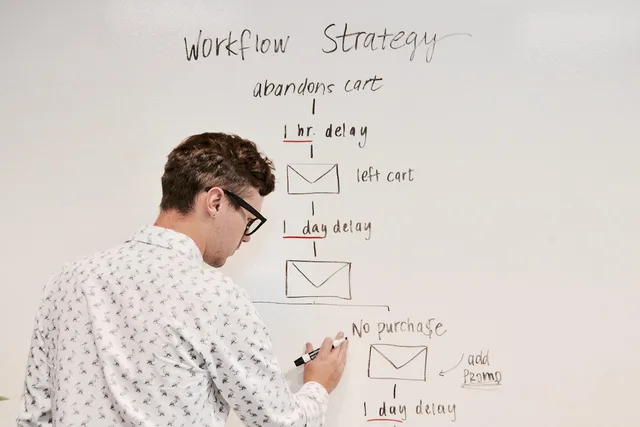
Orangetheory Fitness sends a studio-specific welcome once a membership or trial starts. The email names the location, the coach and the first bookable class, because the subscriber's open question is when to show up. Studio rates are set locally, typically running from the $60s to the $90s a month for a basic tier.
Six Franchise Email Patterns
Pattern
- Welcome
- Orangetheory studio intro
- Local event
- Home Instead community session
- Service reminder
- Jiffy Lube oil-change notice
- Loyalty
- Chick-fil-A One rewards
- Win-back
- Massage Envy lapsed-member offer
- Development
- Anytime Fitness franchise inquiry
Franchise example
- Welcome
- New valid subscription
- Local event
- Market and topic choice
- Service reminder
- Current service schedule
- Loyalty
- Eligible purchase history
- Win-back
- Defined inactive state
- Development
- Candidate request and stage
Entry evidence
- Welcome
- First class booked
- Local event
- Registration or capacity reached
- Service reminder
- Confirmed, changed or canceled
- Loyalty
- Relevant repeat action
- Win-back
- Return or suppression
- Development
- Qualified next conversation
Exit or success
- Welcome
- Local event
- Service reminder
- Loyalty
- Win-back
- Development
A Home Instead office invites its local list to a dementia-care session by market, which is why venue, time and capacity have to be verified before the send. The office books the room, so the franchisee owns the accuracy of those details. A registration, a waitlist or a full-room notice ends the sequence.
Jiffy Lube service reminders tie to a vehicle and a schedule, so the message stops when the appointment changes rather than when a timer fires. Most stores print the next service mileage on a windshield sticker, and the email repeats that number. A conventional oil change typically runs about $50 to $80, with synthetic oil higher.
Chick-fil-A One ties rewards to a scanned purchase, so the loyalty send depends on purchase history rather than a calendar. Points earned over a year move a member through published tiers, which means the reward already exists when the email arrives. The message names one reward and one action.
Massage Envy win-back offers go to members who have lapsed past a defined window. Dues typically run $60 to $90 a month for one service, and first-visit rates near $50 to $70 vary by location, so the offer has to match the local price sheet. The exit is a return or a suppression, not another send.
Anytime Fitness franchise-development email runs on a candidate request and a stage in the pipeline, with discovery days at the brand's Woodbury, Minnesota headquarters. The reader is weighing a business, so the send carries the published franchise fee, investment range and territory facts. The exit is a qualified conversation, not a newsletter signup.
Domino's Piece of the Pie Rewards earns points on qualifying online orders and redeems them at a published threshold. A promotional send works here because the subscriber already holds a balance, so the email can name the gap and the nearest store. The exit is a redemption, or quiet until the next qualifying order.
Where these campaigns break
A well-built welcome can still fail if it repeats one of the franchise email marketing mistakes, such as sending to a list whose source nobody can name.
The Government of Canada's Notify service publishes notification design and content guidance that recommends telling people what they will receive and avoiding duplicate notifications. That is government service design, not franchise law, but it is a fair clarity test for a welcome or a reminder.
A template can lock the brand header, required identity, preference area and measurement tags while letting a location pick a verified event, team member or service module. The send should fail when a required local fact is missing, expired or unavailable.
Example: topic-level preferences
A subscriber may want local events but not weekly offers, or service tips but not development messages. Store topics as controlled preferences under one identity, and show the choices plainly on the confirmation screen and in the email. A location transfer should not silently reset them.
Amazon SES documents how contact lists and topics can add unsubscribe links when a message carries specified list-management values. That is product documentation for one implementation, not a ruling on permission or legal scope, so test the full preference and suppression path before you rely on it.
Review an example before reuse
- Customer state and source are real
- Purpose matches the disclosed expectation
- Local facts and offer can be fulfilled
- Rights, claims and required language are approved
- Accessible content and reply routes work
- Exit, preference and suppression events are tested
- Outcome, cost and customer quality are measured
Turn examples into test cases
The NIST Privacy Framework starting guide outlines a voluntary process for identifying and managing privacy risk. Use it to assign owners for data and replies; it is not legal clearance. The W3C information and relationships explanation says visual structure should also be programmatically available, which is a fair test for any template a franchisee edits.
Keep the evidence record beside the decision so a reviewer can reproduce the reasoning. For open questions about these sends, the common franchise email marketing questions cover the recurring ones.
Common questions
Can the same welcome email serve every location?
The framework can be shared, but location identity, availability, action, language and reply route must be accurate for each site. A welcome that names the wrong studio is worse than no welcome.
Should a receipt carry a promotion?
Mixed-purpose messages need clear intent and review by qualified counsel. Do not use a transactional label to bypass marketing consent.
What makes an example scalable?
Stable data fields, named owners, validation rules and tested fallbacks. Add monitoring so a broken local field surfaces before the send, not after.